

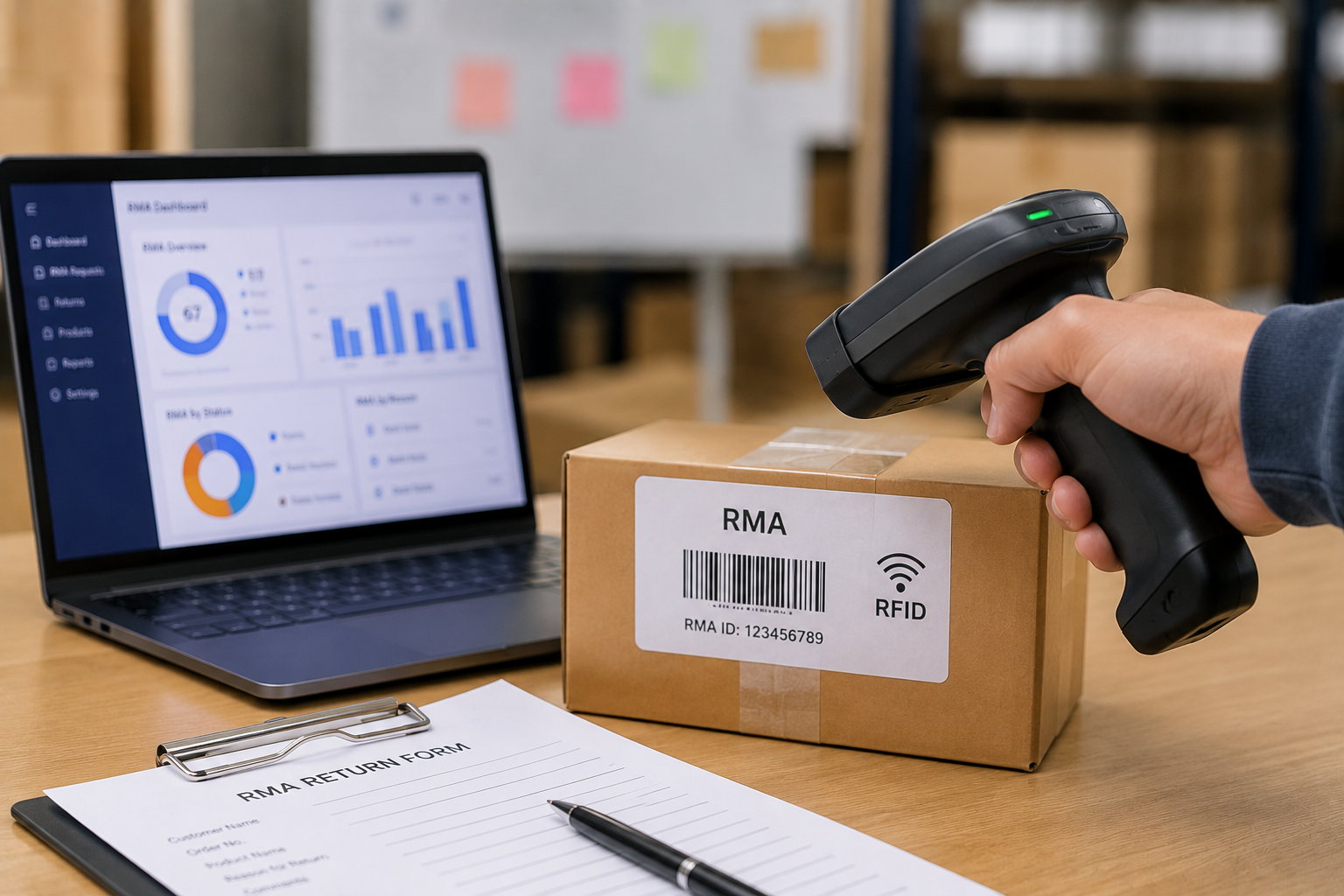
Managing Returned Products Across Multiple Teams
Every returned product follows a journey before it reaches its final disposition. Customer service teams receive return requests, warehouse personnel receive incoming items, quality teams perform inspections, and warranty specialists determine the next step. Keeping these activities connected helps organizations process returns more efficiently while maintaining a consistent customer experience.
As return volumes increase, having clear visibility into every product throughout the RMA process becomes an important part of reverse logistics operations.
Why Product Visibility Supports a Better RMA Workflow
Each returned item carries information that helps determine how it should be handled. Product identity, warranty status, inspection results, and movement between departments all contribute to faster decision-making.
Organizations benefit from maintaining visibility into:
- Product identification
- Return authorization status
- Inspection progress
- Warranty eligibility
- Product location within the facility
- Movement history
- Final disposition status
A centralized view of these activities helps customer service, warehouse, and reverse logistics teams coordinate more effectively.
What Reverse Logistics Teams Should Monitor
An organized RMA process starts with accurate operational records. Key information includes:
- Product serial number or RFID identity
- RMA reference number
- Return date
- Customer information
- Inspection status
- Warranty processing status
- Current storage location
- Repair, replacement, or return outcome
Reviewing this information throughout the process helps teams maintain consistent product handling and improve operational visibility.
Creating a More Efficient Return Workflow
Well-structured return operations rely on standardized processes that connect every stage of product handling. Businesses can strengthen their RMA workflow by:
- Identifying products as soon as they arrive
- Recording inspection activities consistently
- Updating warranty status throughout the process
- Tracking product movement between departments
- Maintaining complete return histories
- Reviewing operational performance through centralized reporting
These practices help ensure that every returned product progresses through the appropriate workflow while providing better visibility for management teams.
How RFID Reverse Logistics Solutions Support RMA Operations
An RFID Reverse Logistics Solution combines RFID identification with IoT-enabled tracking to provide continuous visibility throughout the return process. Each returned product receives a unique digital identity that can be captured automatically as it moves through receiving, inspection, storage, repair, or warranty evaluation.
Depending on operational requirements, the solution can support:
- Automated product identification
- Return merchandise tracking
- Inspection history management
- Warranty processing visibility
- Product location monitoring
- Inventory updates for returned goods
- Centralized reverse logistics dashboards
- Operational reporting across the RMA lifecycle
These capabilities help organizations create a more connected return management process while giving customer service and reverse logistics teams timely access to product information.
Building a More Connected Reverse Logistics Process
An efficient Return Merchandise Authorization process depends on accurate product information, consistent inspection records, and clear visibility across every stage of the return lifecycle. When these elements are connected, businesses can manage product returns, warranty evaluations, and inventory updates with greater confidence.
Organizations looking to modernize reverse logistics operations can consider an RFID Reverse Logistics Solution as part of a connected strategy for managing product identification, inspections, warranty processing, and returned inventory within a centralized operational platform.