

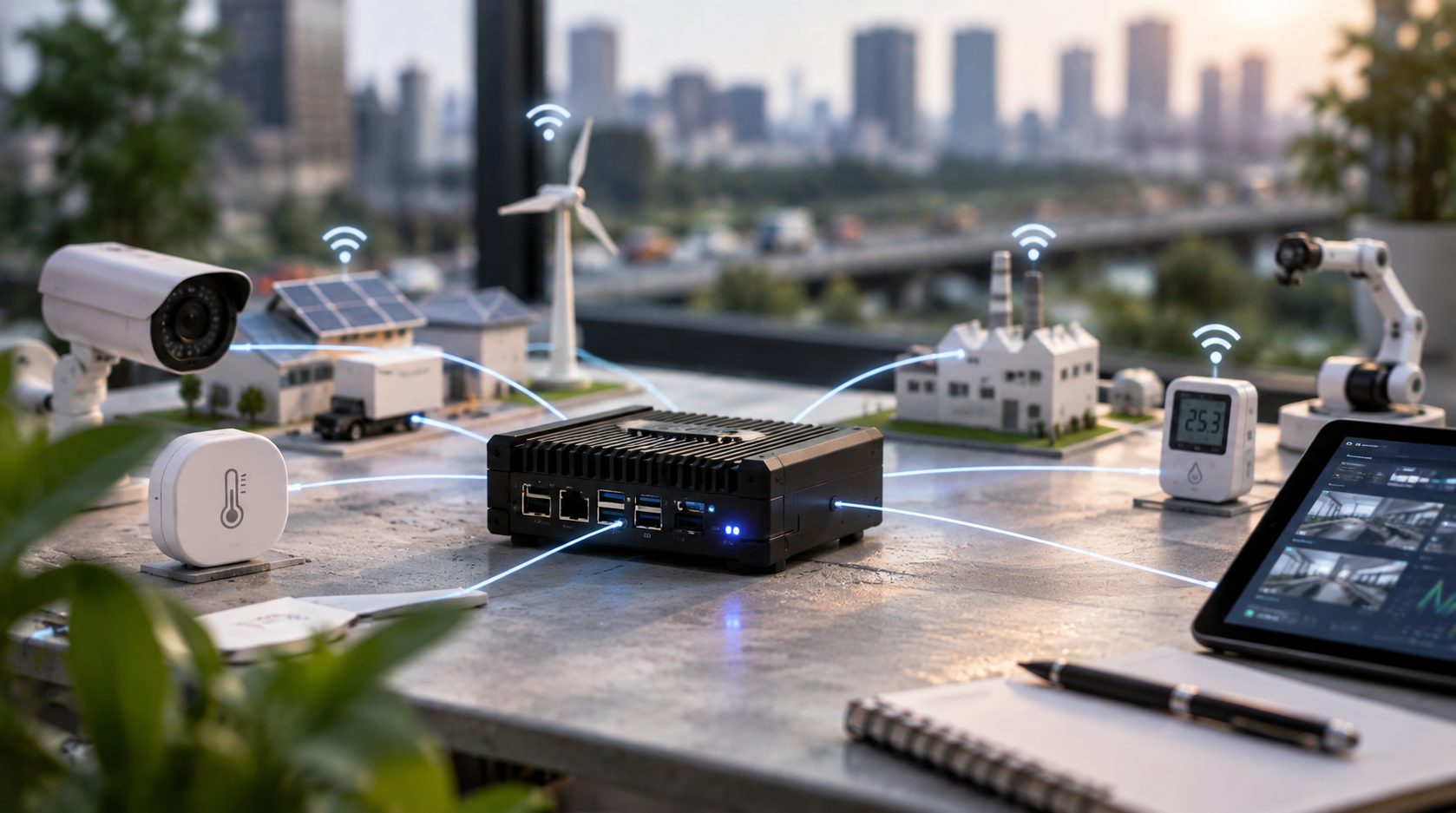
Bringing IoT Intelligence Closer to Connected Devices
Modern IoT environments can include thousands of sensors, machines, cameras, meters, and connected devices operating across factories, warehouses, offices, retail facilities, and field locations. Each device continuously generates operational data that can support monitoring, automation, and decision-making.
As IoT deployments become more sophisticated, where data is processed becomes an important part of system architecture.
Edge Computing addresses this opportunity by bringing computing and data processing capabilities closer to the devices generating information. Instead of sending every piece of data through a centralized environment for processing, selected information can be analyzed closer to its source.
For IT Architects and Technology Decision Makers, this creates a modern IoT architecture designed for faster responses, greater resilience, and scalable connected operations.
What Is Edge Computing in IoT?
Edge Computing is an architecture where data processing takes place at or near the location where data is generated.
In an IoT environment, this can involve:
- Sensors
- IoT devices
- Industrial machines
- Edge gateways
- Local servers
- Connected cameras
- Smart meters
- Industrial controllers
A simplified architecture can be represented as:
IoT Devices → Edge Layer → IoT Platform → Cloud & Business Systems
The edge layer can collect, filter, process, and analyze selected information before sending relevant data to centralized platforms.
This approach gives organizations greater flexibility in determining which information should be processed locally and which data should be transmitted for centralized analytics, reporting, or long-term storage.
Why Processing Data Closer to Devices Matters
IoT applications often involve events that benefit from rapid processing. Equipment conditions, environmental changes, machine status, and operational events can require immediate system responses.
Processing data closer to the source can support:
- Faster response times
- Real-time event detection
- Local decision-making
- Reduced data transmission requirements
- Greater operational resilience
- Scalable IoT deployments
- Efficient bandwidth utilization
For example, an industrial sensor can send machine data to an edge gateway located within the production environment. The gateway can analyze the incoming information and identify a predefined machine condition immediately, while relevant summaries and historical information are sent to the central IoT platform.
This creates a more responsive connection between physical operations and digital intelligence.
Edge Computing and Real-Time IoT Applications
Real-time applications are among the areas where Edge Computing can provide significant value.
Consider a manufacturing facility with connected production equipment. Sensors may continuously generate information about:
- Machine operating status
- Temperature
- Vibration
- Production cycles
- Equipment performance
- Energy consumption
An edge device can process selected data locally and trigger predefined responses when certain conditions are detected.
For instance, if a monitored machine reaches a specific vibration threshold, the edge layer can recognize the event immediately and initiate an appropriate operational workflow according to the system configuration.
This architecture can support applications such as:
- Machine condition monitoring
- Predictive maintenance
- Industrial automation
- Energy monitoring
- Environmental monitoring
- Video analytics
- Smart building management
- Asset tracking
How Edge Computing Improves IoT Reliability
A modern IoT architecture benefits from having processing capabilities distributed closer to operational environments.
Edge Computing can allow connected devices to continue performing defined processing activities even when communication with a centralized platform experiences temporary changes.
Depending on the architecture, an edge device can:
- Collect sensor information
- Store temporary data
- Process predefined rules
- Detect events locally
- Trigger local actions
- Synchronize information with the central platform
- Resume data synchronization when connectivity is restored
This creates an IoT environment with greater architectural resilience and supports continuous operational visibility across different locations.
For organizations operating factories, warehouses, remote facilities, or field assets, local processing can become an important component of a reliable IoT strategy.
Edge Computing Helps Manage Growing IoT Data Volumes
IoT deployments can generate substantial amounts of data. A single connected device may produce readings continuously, while a large-scale deployment can involve thousands or even millions of data points.
Edge Computing provides an opportunity to process information closer to the source before transmitting it to centralized systems.
For example, an edge gateway can:
- Collect raw sensor readings.
- Filter information according to predefined rules.
- Aggregate repeated measurements.
- Identify important events.
- Generate local insights.
- Send relevant information to the central IoT platform.
This architecture can help organizations manage data flows more efficiently as IoT deployments expand.
Edge Computing Architecture for Multi-Site Operations
For organizations operating across multiple facilities, Edge Computing can provide a distributed architecture that connects local operations with centralized digital platforms.
A typical structure may look like:
Sensors & Devices
↓
Local Edge Gateway
↓
Local Processing & Event Detection
↓
Central IoT Platform
↓
Analytics & Dashboards
↓
Enterprise Systems
Each facility can have its own edge layer while the central IoT platform provides organization-wide visibility.
This enables IT Architects to create a scalable framework where individual sites can process operational information locally while contributing relevant data to a centralized environment.
What Should IT Architects Consider?
Designing an Edge Computing architecture requires consideration of both technical and operational requirements.
Key areas to evaluate include:
- Number of connected devices
- Data generation frequency
- Required response time
- Network connectivity
- Local processing requirements
- Edge hardware capabilities
- Data storage requirements
- Security architecture
- Device management
- Integration with IoT platforms
- Cloud connectivity
- Scalability across locations
- Maintenance and lifecycle management
Different IoT applications may require different edge architectures. A simple environmental monitoring system may require lightweight processing, while an industrial automation environment may require significantly greater local computing capabilities.
Edge Computing and IoT Security
Edge infrastructure can also become an important component of a modern IoT security architecture.
Organizations can implement security controls across different layers, including:
- Device authentication
- Secure communication
- Access management
- Data encryption
- Network segmentation
- Edge device monitoring
- Software and firmware management
- Security event logging
A well-designed architecture allows security requirements to be incorporated into the IoT environment from devices through the edge layer and into centralized platforms.
For Technology Decision Makers, this creates a stronger foundation for managing connected infrastructure as IoT adoption grows.
How Edge Computing Solutions Support Modern IoT Deployments
An Edge Computing Solution can provide the infrastructure required to process IoT data closer to connected devices while maintaining integration with centralized platforms.
Depending on organizational requirements, an Edge Computing Solution can support:
- Local IoT data processing
- Real-time event detection
- Edge analytics
- Sensor data aggregation
- Local data storage
- Device connectivity
- Protocol integration
- Automated local responses
- Central IoT platform synchronization
- Multi-site edge deployment
- Edge device monitoring
- Secure data transmission
These capabilities allow organizations to build an IoT architecture that combines local intelligence with centralized visibility.
Building a More Intelligent IoT Architecture
Edge Computing represents an important evolution in modern IoT architecture. By placing processing capabilities closer to connected devices, organizations can create faster, more resilient, and more scalable digital environments.
For IT Architects and Technology Decision Makers, the combination of IoT, Edge Computing, cloud platforms, and analytics creates a flexible foundation for connecting physical operations with digital intelligence.
Organizations looking to strengthen their IoT infrastructure can consider Edge Computing Solutions as part of a modern architecture that brings processing closer to devices, improves operational responsiveness, supports distributed environments, and provides a scalable foundation for future IoT growth.