

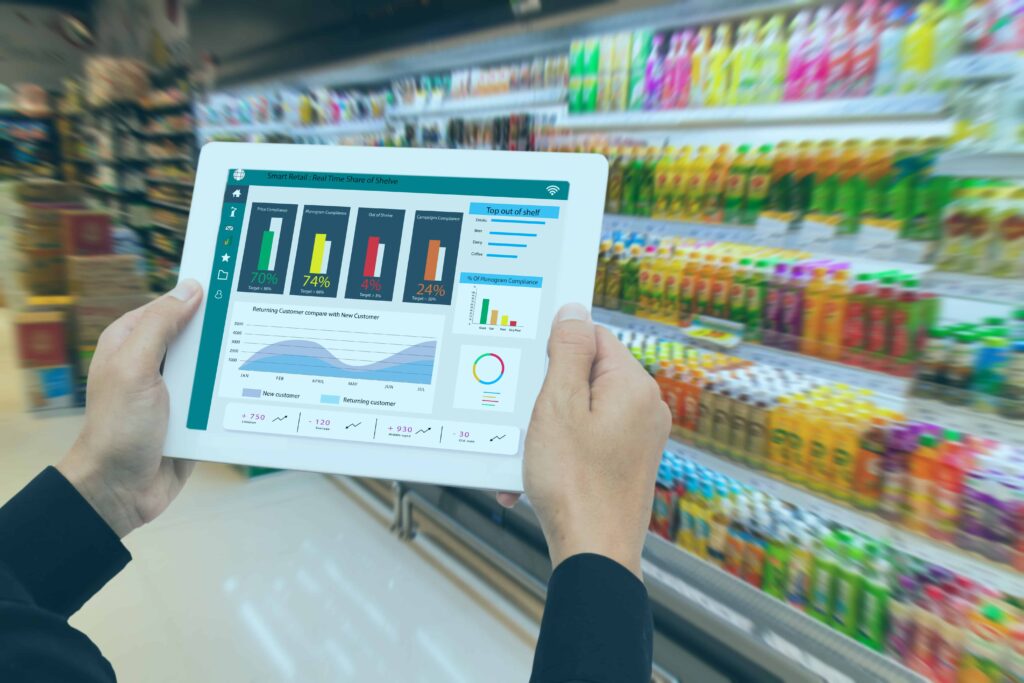
The retail industry increasingly relies on IoT to improve daily operations, reduce inefficiencies, and deliver a more consistent customer experience. The most valuable IoT solutions are not those that showcase advanced technology, but those that solve real, recurring problems on the shop floor.
Below are five practical and modern IoT solutions that retail businesses genuinely need today. Each focuses on clarity of purpose, ease of adoption, and measurable operational impact.
1. Shelf Availability Sensors
One of the most common retail issues is empty or partially stocked shelves that go unnoticed for too long. Shelf availability sensors help retailers detect when products are running low or missing from display areas.
These sensors provide timely signals that allow staff to restock before customers encounter empty shelves. The impact is immediate:
- Reduced lost sales due to out-of-stock items
- Faster response to high-demand products
- Better alignment between backroom inventory and shelf reality
By ensuring shelves reflect actual demand, retailers improve both revenue consistency and customer satisfaction.
2. Entrance-Based Footfall Counters
Understanding customer traffic is essential for staffing, merchandising, and promotion planning. Entrance-based footfall counters track how many people enter and exit a store throughout the day.
This data enables retailers to:
- Identify peak and low-traffic hours
- Optimize staff scheduling
- Measure the effectiveness of promotions or storefront displays
Even basic daily and hourly traffic insights can significantly improve operational decision-making without requiring complex analytics.
3. Digital Price Labels
Price accuracy is critical in retail. Digital price labels allow retailers to update prices and promotions consistently across shelves without manual label replacement.
Key benefits include:
- Reduced pricing errors between shelves and checkout
- Faster execution of promotions and discounts
- Improved store presentation and professionalism
Digital labels also support pricing agility, enabling retailers to respond quickly to market changes while maintaining customer trust.
4. Temperature Monitoring Sensors for Storage Areas
For retailers dealing with food, beverages, or pharmaceuticals, temperature control is non-negotiable. IoT temperature sensors placed in refrigerators, freezers, and storage rooms provide continuous monitoring.
These sensors help retailers:
- Detect temperature deviations early
- Prevent product spoilage and financial loss
- Support compliance with safety and quality standards
By turning environmental conditions into visible data, retailers reduce operational risk and protect inventory value.
5. Smart Queue Monitoring Sensors
Long checkout lines are one of the fastest ways to damage customer experience. Smart queue monitoring sensors track queue length and waiting time at checkout areas.
With this insight, retailers can:
- Open additional checkout counters when needed
- Reassign staff during peak periods
- Reduce customer frustration caused by long waits
Queue monitoring improves flow management without changing store layout or adding unnecessary complexity.
From Technology Adoption to Everyday Retail Impact
IoT adoption in retail is most effective when it focuses on everyday challenges rather than technological novelty. Shelf availability, foot traffic, pricing accuracy, storage conditions, and queue management are universal concerns across retail formats.
By implementing IoT solutions that address these areas directly, retailers gain better visibility into store operations, respond faster to customer needs, and create a more reliable shopping experience. In a competitive retail landscape, practical IoT solutions are not optional additions—they are essential tools for sustainable performance and growth.