

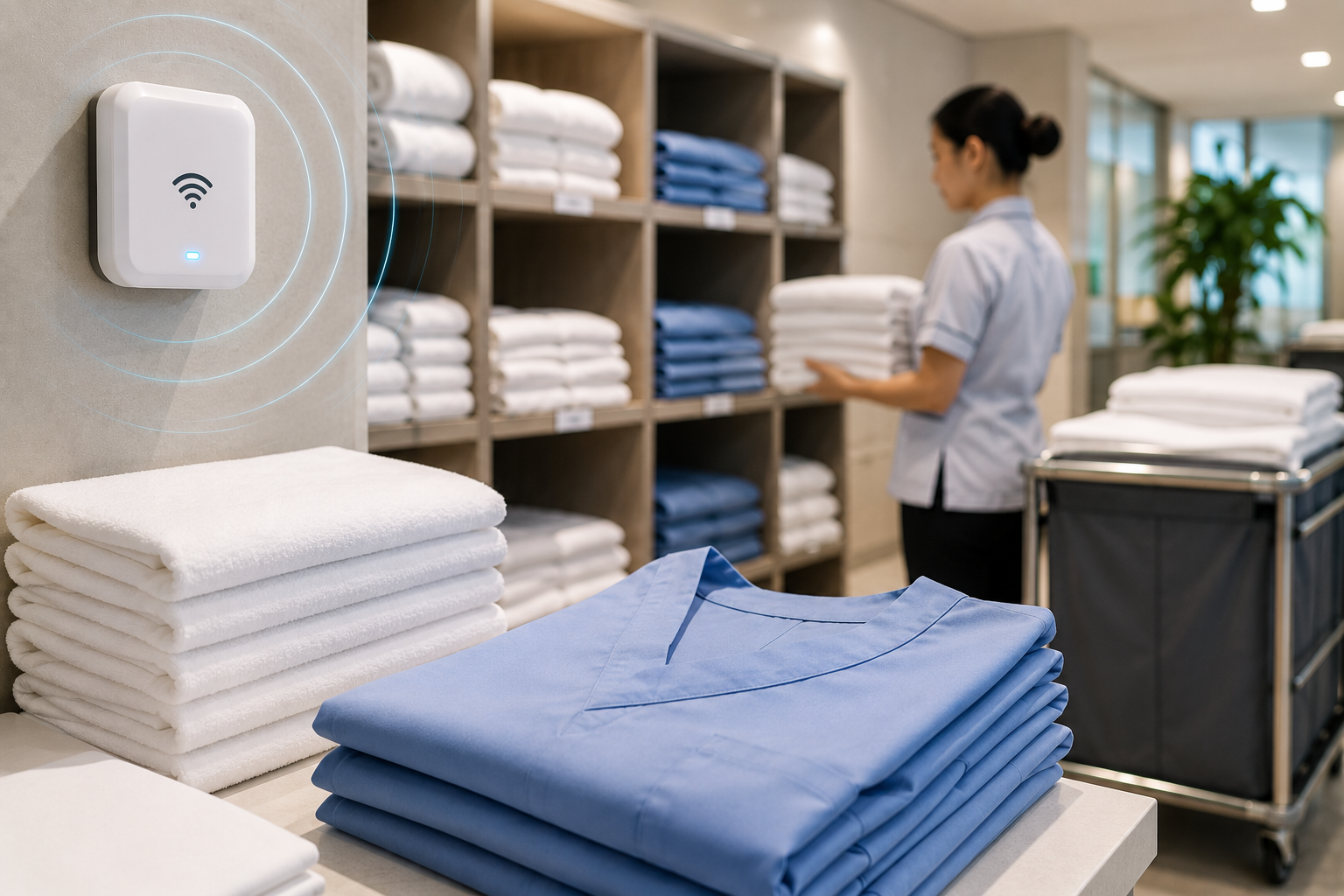
Keeping Linen Available Where It Is Needed
Hospitals and hotels rely on a continuous circulation of linens and uniforms to support daily operations. From patient rooms and operating areas to guest rooms and housekeeping departments, every item moves through multiple stages before returning to service. Having clear visibility into this circulation helps operations teams maintain the right inventory at the right location.
As facilities grow and the number of reusable textile assets increases, automated identification provides a practical way to monitor movement while supporting more informed operational planning.
Why Visibility Matters Throughout the Linen Lifecycle
Every linen or uniform typically passes through several operational stages, including collection, transportation, laundering, storage, and redistribution. Without consistent visibility across these stages, it becomes more challenging to understand inventory availability and circulation performance.
A structured tracking process allows managers to monitor:
- Current inventory by location
- Linen movement between departments
- Laundry processing status
- Uniform allocation by employee or department
- Circulation history
- Inventory turnover
- Asset availability for daily operations
This information supports better coordination across housekeeping, laundry, logistics, and facility management teams.
What Operations Managers Should Review
Before implementing a linen tracking initiative, organizations should evaluate the operational workflow rather than focusing only on the technology.
Key areas to review include:
- Where linens are issued and returned
- Laundry processing capacity
- Storage locations
- Inventory replenishment procedures
- Asset identification methods
- Reporting requirements
- Performance metrics for circulation and inventory
Establishing clear operational processes creates a stronger foundation for long-term inventory planning.
How RFID and IoT Improve Linen Circulation
RFID tags allow each linen or uniform to carry a unique digital identity. Combined with IoT-enabled readers installed at collection points, laundry facilities, storage rooms, and distribution areas, every movement can be recorded automatically throughout the asset lifecycle.
This enables organizations to:
- Track linen circulation in real time
- Improve inventory visibility across multiple locations
- Monitor laundering and redistribution activities
- Support inventory planning with operational data
- Maintain historical movement records
- Provide managers with centralized dashboards for operational review
By connecting identification with operational data, organizations gain a clearer understanding of how textile assets move throughout the facility.
How RFID Linen Tracking Solutions Support Daily Operations
An RFID Linen Tracking Solution helps connect RFID identification devices, IoT readers, and operational dashboards into a centralized management platform.
Depending on operational requirements, the solution can support:
- Automated linen identification
- Multi-location inventory monitoring
- Uniform allocation tracking
- Linen circulation analytics
- Inventory reporting
- Asset movement history
- Operational dashboards for facility managers
These capabilities help hospital administrators and hotel operations managers make inventory planning more measurable while maintaining consistent visibility across the entire linen management process.
Creating a More Connected Linen Management Process
Effective linen and uniform management depends on timely information, coordinated workflows, and accurate inventory visibility. RFID and IoT provide a connected approach that allows organizations to monitor textile assets throughout their lifecycle while supporting better operational planning and resource utilization.
For organizations looking to modernize linen operations, an RFID Linen Tracking Solution provides a scalable way to connect asset identification, circulation monitoring, and inventory planning into a single operational view that supports efficient healthcare and hospitality management.