

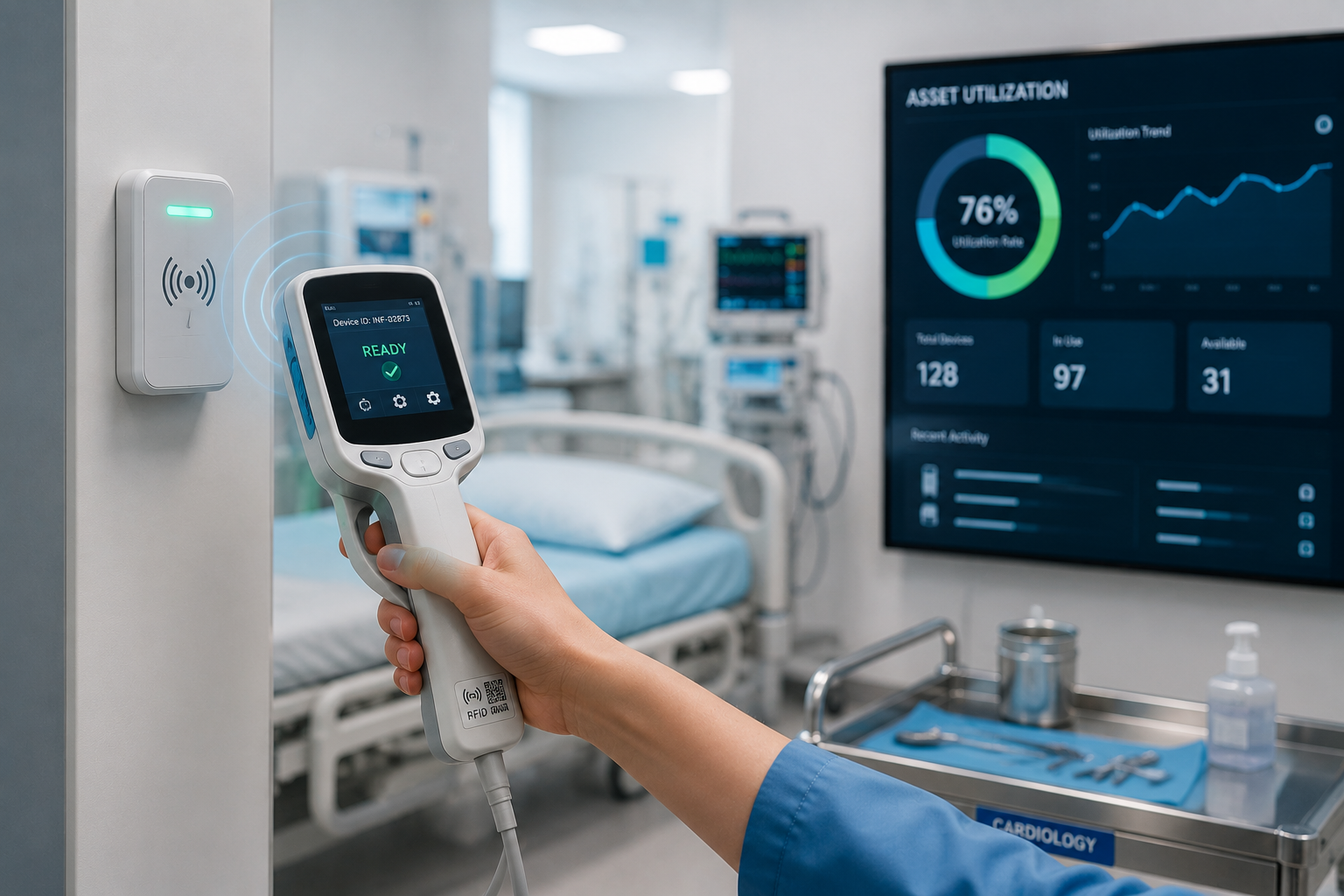
Medical devices move continuously throughout a hospital. Infusion pumps, patient monitors, wheelchairs, portable ultrasound systems, and other critical equipment are shared across departments to support patient care. Having clear visibility into where these assets are and how they are being used helps operations teams allocate equipment more effectively and maintain service readiness.
As hospitals expand their facilities and equipment inventory, real-time asset visibility becomes an important part of efficient resource management.
Why Utilization Data Matters
Knowing a device's location is only one part of effective asset management. Hospital operations managers and biomedical engineers also benefit from understanding how often equipment is used, where it is most frequently deployed, and when maintenance is due.
Tracking utilization data helps organizations monitor:
- Current device availability
- Equipment location across departments
- Utilization frequency
- Maintenance history
- Scheduled service activities
- Asset assignment and movement history
- Inventory distribution throughout the hospital
These insights support better coordination between clinical teams, biomedical engineering, and hospital operations.
What Healthcare Teams Should Evaluate
Before improving medical device tracking, healthcare providers should review the information that supports both operational planning and equipment lifecycle management.
Key areas include:
- Devices with the highest utilization rates
- Equipment availability by department
- Asset movement between clinical areas
- Preventive maintenance schedules
- Maintenance history for each device
- Inventory levels for critical equipment
- Operational reports for utilization trends
Reviewing these metrics regularly helps organizations make informed decisions about equipment allocation and future procurement.
How RFID and IoT Improve Medical Device Utilization Tracking
RFID tags provide each medical device with a unique digital identity. Combined with IoT-enabled readers installed throughout the hospital, equipment movements can be captured automatically as devices travel between departments.
This enables healthcare providers to:
- Monitor equipment availability in near real time
- Track utilization patterns across departments
- Maintain maintenance and service histories
- Improve inventory planning using operational data
- View centralized dashboards for asset monitoring
- Analyze utilization trends to support operational planning
By connecting location data with utilization information, hospitals gain a more complete view of how medical devices support daily clinical operations.
How RFID Healthcare Asset Management Supports Hospital Operations
An RFID Healthcare Asset Management solution combines RFID identification, IoT infrastructure, and centralized asset management software into a unified platform for monitoring medical equipment.
Depending on operational requirements, the solution can support:
- Medical device identification
- Real-time asset visibility
- Utilization tracking
- Maintenance history management
- Preventive maintenance planning
- Inventory reporting
- Operational dashboards for hospital management
These capabilities help hospital operations managers and biomedical engineers make equipment planning more measurable while maintaining clear visibility throughout each asset's lifecycle.
Supporting Better Equipment Planning Through Connected Asset Visibility
Medical device utilization data provides valuable insights that extend beyond equipment location. Understanding availability, usage frequency, and maintenance history enables healthcare organizations to plan resources more effectively while supporting reliable clinical operations.
For healthcare providers looking to strengthen equipment visibility and utilization management, an RFID Healthcare Asset Management solution offers a scalable approach to connecting asset identification, utilization tracking, maintenance records, and inventory visibility within a centralized operational platform.