

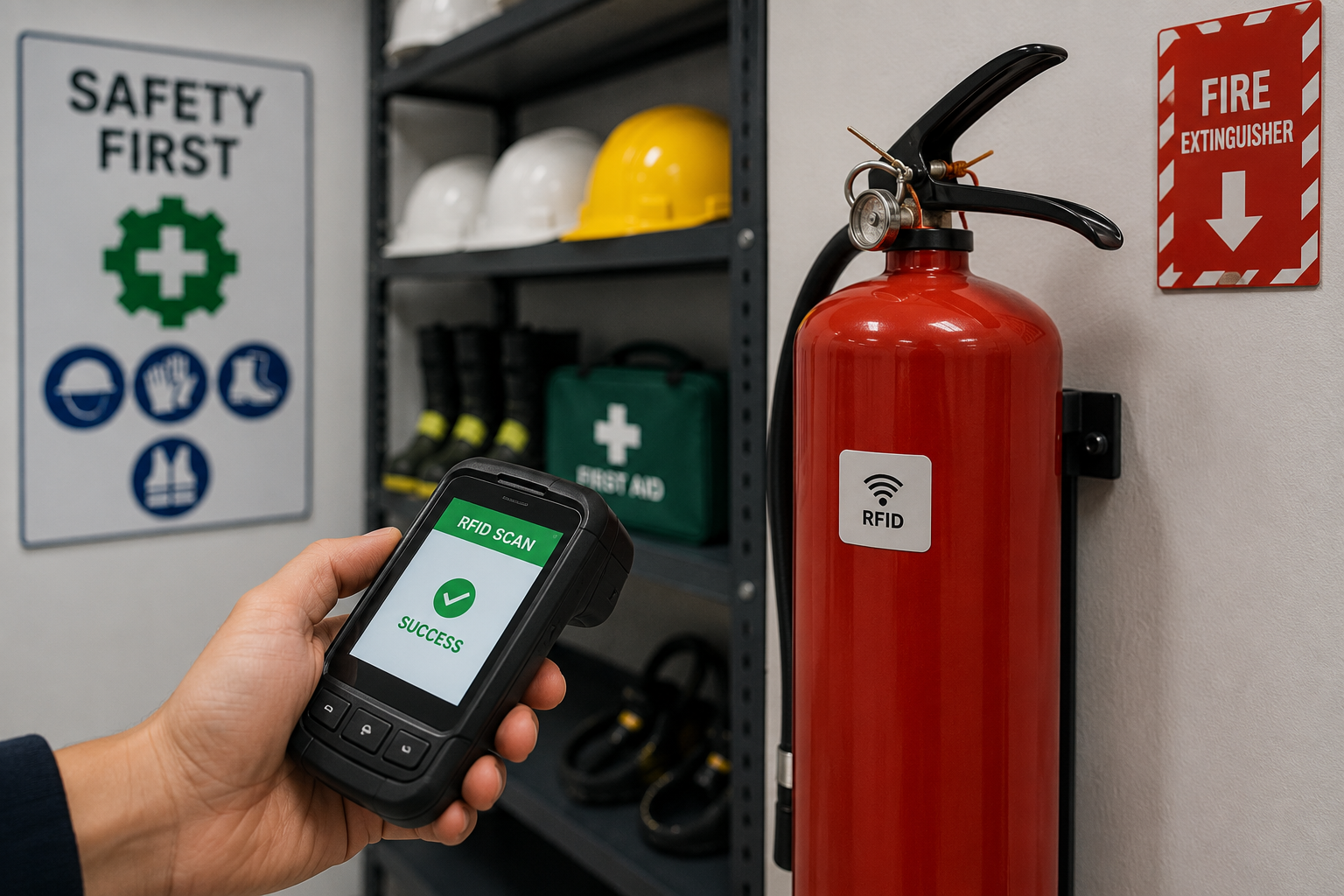
Emergency response and workplace safety equipment are distributed throughout offices, factories, warehouses, and commercial facilities. Fire extinguishers, first aid kits, spill response kits, emergency eyewash stations, personal protective equipment (PPE), and other safety assets all play an important role in supporting workplace readiness.
For EHS and Facility Managers, maintaining clear visibility into where these assets are located, whether they are available, and when they were last inspected helps support a well-organized safety management process.
Why Safety Equipment Visibility Becomes More Important as Facilities Grow
As organizations expand across multiple floors, buildings, or sites, the number of safety assets increases as well. Equipment may be relocated, assigned to different operational areas, or scheduled for routine inspections throughout the year.
Maintaining up-to-date information allows teams to monitor:
- Equipment availability
- Current asset location
- Inspection status
- Scheduled maintenance activities
- Asset movement history
- Equipment assigned to specific work areas
- Workplace safety asset inventory
Having this information in one place supports more consistent planning and coordination across EHS and facility teams.
What EHS and Facility Managers Should Monitor
A structured equipment management process begins with accurate operational records. The following information provides a strong foundation for ongoing monitoring:
- Asset identification number
- Equipment category
- Installation or storage location
- Inspection schedule
- Most recent inspection date
- Maintenance history
- Current equipment status
- Assigned facility or operational area
Regularly reviewing these records helps organizations maintain better visibility into workplace safety resources while supporting inspection planning.
How RFID and IoT Improve Safety Equipment Management
RFID tags give each safety asset a unique digital identity, while IoT-enabled readers automatically capture asset information as equipment is inspected, relocated, or inventoried. The collected data is synchronized within a centralized platform, giving managers a current view of equipment across the workplace.
Organizations can use this approach to:
- Monitor equipment availability
- Track asset locations
- Maintain inspection histories
- Record equipment movement
- Improve inventory visibility
- Support inspection scheduling
- Access centralized operational dashboards
With connected asset information, teams gain a clearer understanding of workplace safety equipment throughout its operational lifecycle.
How RFID Safety Equipment Tracking Supports Workplace Operations
An RFID Safety Equipment Tracking solution combines RFID identification, IoT monitoring, and centralized asset management to support day-to-day workplace safety operations.
Depending on organizational requirements, the solution can help manage:
- Workplace safety equipment inventory
- Inspection status tracking
- Emergency equipment location monitoring
- Asset movement records
- Maintenance history
- Operational reporting
- Facility-wide equipment dashboards
These capabilities help EHS and Facility Managers maintain organized safety equipment records while making inspections and asset management easier to review and coordinate.
Building a More Connected Workplace Safety Program
A well-organized equipment management process helps organizations maintain better visibility into the availability, condition, and location of workplace safety assets. Centralized records also provide valuable operational insight for inspection planning, equipment allocation, and facility management.
Organizations looking to strengthen workplace safety asset visibility can consider an RFID Safety Equipment Tracking solution as part of a connected approach to managing inspections, equipment locations, and operational records across their facilities.