

Supporting a Better Library Experience Every Day
Library services involve more than organizing books on shelves. Every day, librarians manage borrowing requests, book returns, inventory updates, and collection maintenance while ensuring that library resources remain easily accessible to students, educators, and visitors.
For Library Managers and Education Administrators, maintaining accurate information about library collections helps support efficient operations and a positive user experience.
Why Collection Visibility Matters as Libraries Grow
As library collections expand, managing thousands of books and educational resources becomes an ongoing operational activity. Books are continuously borrowed, returned, relocated, and added to different sections throughout the library.
Having centralized visibility allows library teams to monitor:
- Book availability
- Collection locations
- Borrowing status
- Return activity
- Collection movement history
- Inventory audit progress
- Frequently borrowed materials
With up-to-date information, libraries can organize their collections more effectively while supporting daily circulation activities.
What Library Managers Should Monitor
An organized library management process begins with reliable collection records. Important information includes:
- Book identification
- Collection category
- Shelf location
- Borrowing status
- Return history
- Current availability
- Inventory audit records
- Collection utilization
Regularly reviewing this information helps libraries maintain accurate catalog records while supporting collection planning and service quality.
Building a More Efficient Library Workflow
A structured circulation process helps library staff manage collections more consistently while making services easier for library users.
Libraries can strengthen daily operations by:
- Maintaining accurate collection records
- Monitoring borrowing and return activities
- Tracking book locations throughout the library
- Conducting inventory audits regularly
- Reviewing collection utilization trends
- Using operational reports to support collection planning
For example, during a semester inventory review, library staff can quickly identify books that have been returned, relocated, or require shelf verification, making collection management more organized and efficient.
How RFID Library Management Solutions Support Self-Service Operations
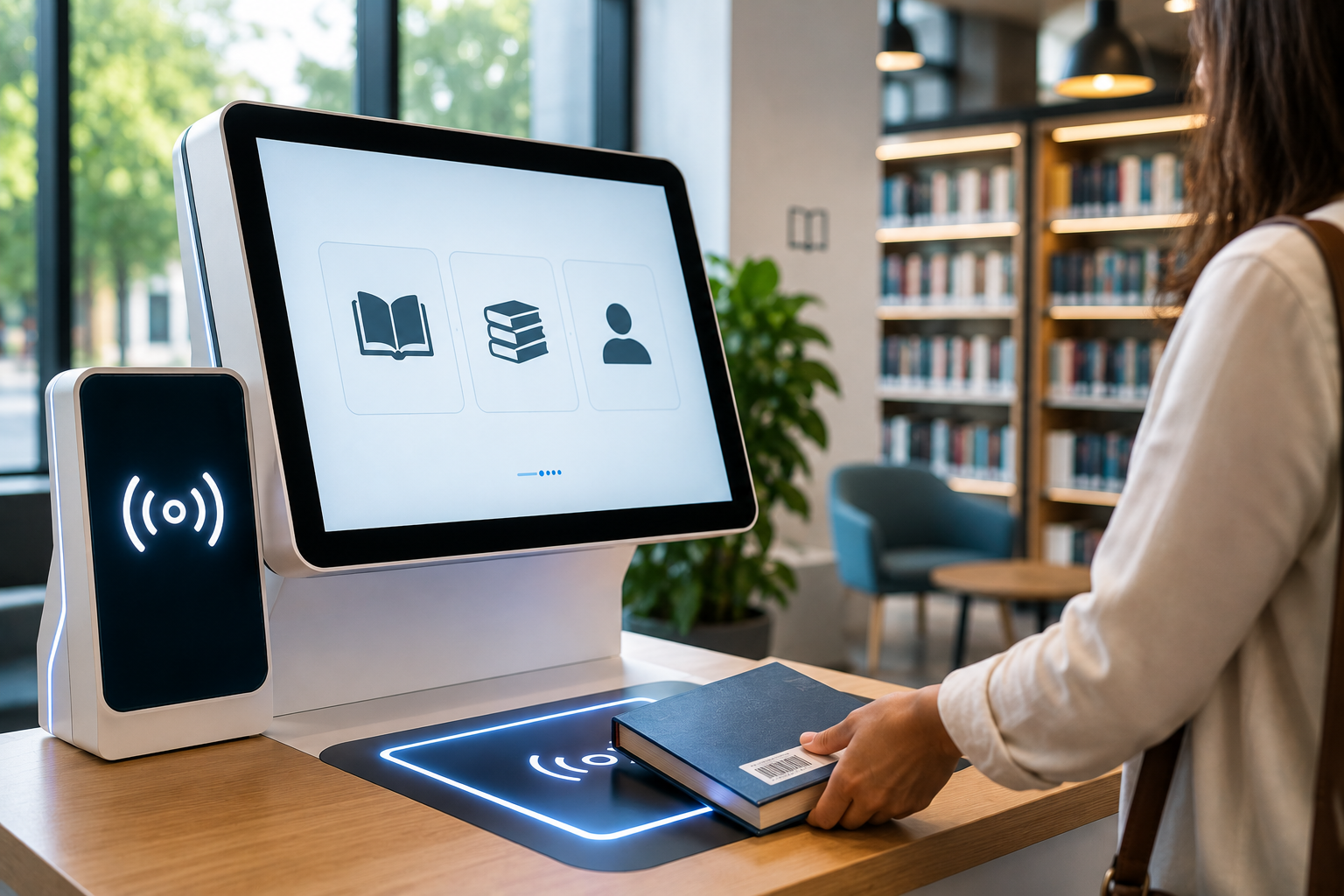
An RFID Library Management Solution combines RFID identification with self-service technology to improve the management of library collections. Each book is equipped with an RFID tag, while self-service kiosks and RFID readers automatically capture borrowing, return, and inventory information.
Depending on operational requirements, the solution can support:
- Self-service book borrowing
- Self-service book returns
- Real-time collection tracking
- Inventory audit management
- Book location monitoring
- Collection utilization reporting
- Library operation dashboards
- Collection security monitoring
These capabilities help Library Managers and Education Administrators maintain accurate collection records while supporting efficient circulation, inventory management, and day-to-day library operations.
Creating a More Connected Library Management Process
Well-managed library operations depend on accurate collection information, efficient circulation activities, and clear visibility into library resources. When these elements are connected, libraries can provide a more consistent experience for users while supporting informed collection management decisions.
Organizations looking to modernize library services can consider an RFID Library Management Solution as part of a connected strategy for streamlining book borrowing, returns, inventory audits, and collection monitoring while supporting an engaging and efficient library environment.