

A Product Arrives, but What Happened Between Dispatch and Receipt?
A high-value product leaves a distribution facility at 9:00 AM and reaches its destination several hours later. The receiving team confirms that the shipment has arrived, but a Compliance Manager may need a more complete history: When was the product dispatched? Which facility released it? When did custody transfer to the logistics provider? What conditions were recorded during transportation? Who confirmed receipt?
For products such as premium electronics, specialized industrial components, luxury goods, sensitive laboratory materials, or other controlled assets, these individual events form an important operational record.
A digital chain of custody organizes those events into a traceable history that follows the product as responsibility moves between locations, organizations, and authorized parties.
A Useful Chain of Custody Needs More Than a Location
Knowing where a product was recorded at a particular moment provides valuable visibility, but custody requires additional context.
Supply chain and compliance teams may need to connect several pieces of information:
- Unique product or shipment identification
- Origin and destination
- Dispatch timestamp
- Custody holder or responsible party
- Transfer and receipt events
- Checkpoint or facility information
- Shipment status
- Environmental readings when relevant
- Handling events captured by the monitoring system
- Supporting transaction or shipment references
Together, these records help teams reconstruct the product journey from one custody point to another.
The exact information required depends on the product, supply chain design, contractual requirements, internal procedures, and any applicable compliance obligations.
Define the Custody Events Before Tracking the Product
A digital chain of custody becomes more useful when the business first determines which events represent an official custody change.
Consider a high-value component moving from a manufacturer to a customer through a logistics provider. Its journey might include:
- The manufacturer prepares and identifies the product for dispatch.
- The product leaves the manufacturer's controlled facility.
- The logistics provider receives responsibility for the shipment.
- The shipment passes through a regional distribution facility.
- The product reaches the destination.
- An authorized receiving party confirms receipt.
Each checkpoint can create a new event in the product history.
The important point is to establish what information should be recorded at each stage. A timestamp alone may confirm when an event occurred, while an identification record, location, transaction reference, and responsible party provide the additional context needed to understand the transfer.
Product Condition Can Be Part of the Custody Record
For some high-value products, custody history also needs context about how the product was handled or stored while moving through the supply chain.
Depending on the product and monitoring requirements, IoT sensors may capture information such as:
- Temperature
- Humidity
- Shock or vibration
- Door or container status
- Other relevant environmental conditions
For example, a sensitive component may move through every expected custody checkpoint while temperature monitoring provides a parallel record of its storage and transportation conditions.
This gives Compliance Managers and Supply Chain Directors two complementary views: the product's custody history and the monitored conditions associated with its journey.
Environmental monitoring requirements should be defined according to the characteristics of the product and the organization's applicable operational or compliance requirements.
What Should Teams Be Able to Verify?
Before implementing digital chain-of-custody technology, it helps to define the questions the resulting records should answer.
A practical review may include:
- Can each tracked product or shipment be uniquely identified?
- Which checkpoints should record product movement?
- What event officially represents a custody transfer?
- Which person, organization, or operational unit is responsible at each stage?
- Are timestamps required for dispatch, transfer, and receipt?
- Which environmental parameters need monitoring?
- How should exceptions or alerts be recorded?
- How long should historical records remain available?
- Which teams need access to the records?
- What information may be required during an internal review, customer inquiry, or audit?
These questions help ensure the tracking process is designed around business requirements rather than simply collecting more data.
Build One Continuous History from Multiple Operational Events
Once custody points have been defined, teams can establish a consistent process for recording product movement.
A practical approach is to assign every tracked product or shipment a unique identity, define the checkpoints where events should be captured, and connect each event to the relevant timestamp and operational context.
When environmental monitoring is required, sensor readings can also be associated with the appropriate shipment, container, location, or monitoring period.
This creates a record that can show a sequence such as:
Product identified → dispatched → custody transferred → checkpoint recorded → conditions monitored → destination reached → receipt confirmed
The specific workflow will vary according to the supply chain. What matters is that each record can be connected to the relevant product and operational event.
Where RFID and IoT Fit into Digital Chain of Custody
Once the custody process has been defined, RFID and IoT can help make product identification and monitoring more connected.
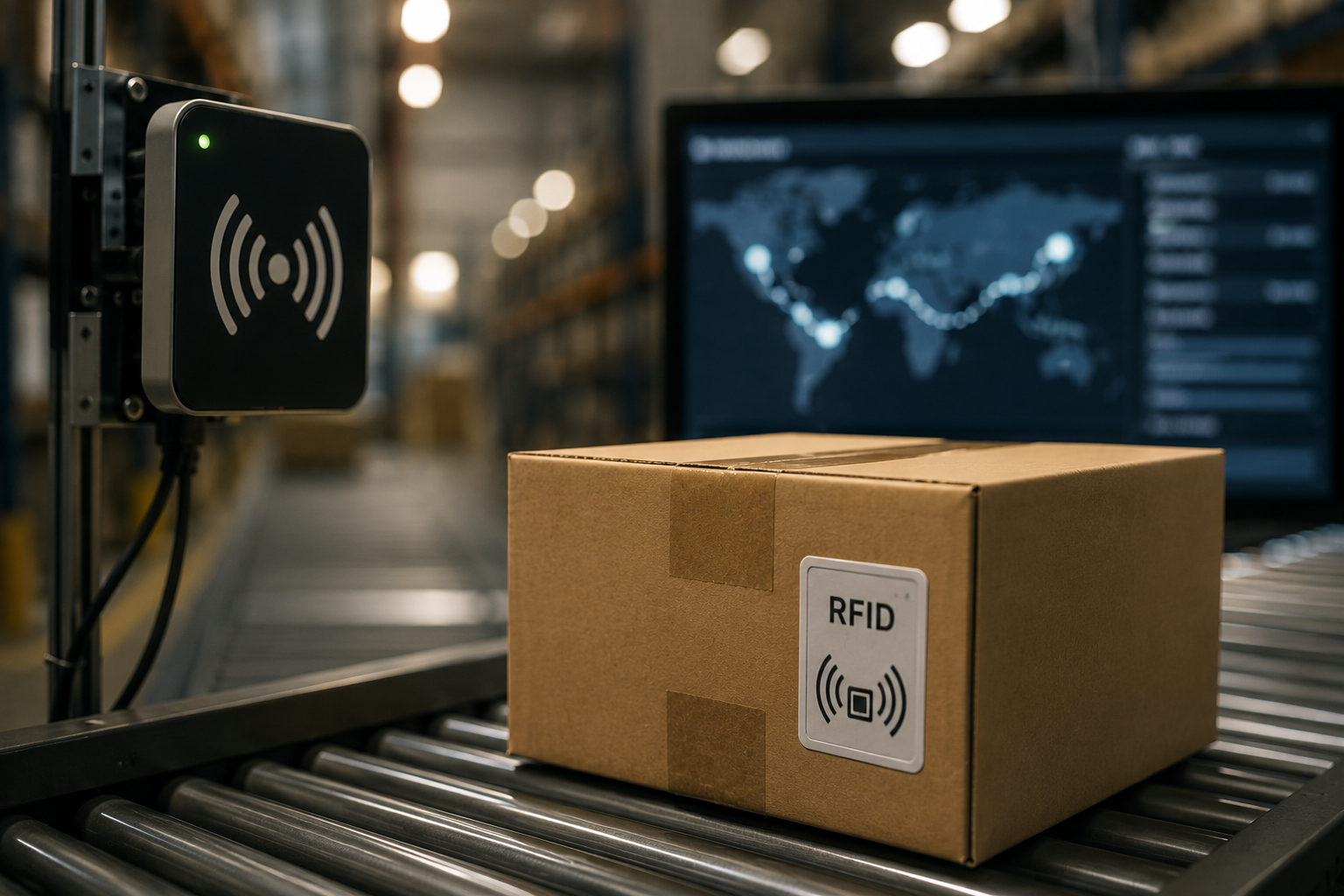
RFID tags provide products, packages, containers, or other tracked units with a digital identity. Compatible RFID readers can capture that identity at configured checkpoints, such as warehouse gates, dispatch areas, receiving points, or distribution facilities.
IoT devices can complement these identification records by collecting relevant environmental or operational data during the product journey.
An RFID & IoT Traceability Platform, depending on its configuration and integrations, can bring together information such as:
- RFID-based product or shipment identification
- Checkpoint and movement records
- Custody transfer events
- Dispatch and receiving timestamps
- Environmental sensor readings
- Alert histories
- Product or shipment status
- Historical traceability records
- Centralized monitoring and reporting
RFID itself identifies the tagged object; the broader traceability platform connects those readings with custody events, locations, business records, sensor information, and workflows.
Traceability Becomes More Valuable When Events Have Context
A long list of RFID reads or sensor measurements is not automatically a complete chain of custody. The business value comes from connecting those data points to meaningful operational events.
For example, an RFID read at a warehouse gate becomes more useful when the record also indicates that the product was dispatched from Facility A at 09:02 under Shipment 4582. A later read can document its arrival at another configured checkpoint, while an IoT record can provide environmental context for the relevant monitoring period.
This structure gives teams a clearer basis for reviewing what happened throughout the journey and supports more organized investigation when a particular shipment or handling event needs attention.
Creating a More Verifiable Product Journey
For high-value products, traceability is strongest when identification, custody transfers, timestamps, checkpoints, and relevant condition data form one connected history. The goal is to make each important stage of the product journey easier to reconstruct and review.
An appropriately configured RFID & IoT Traceability Platform can support this approach by connecting product identification with movement events, custody records, and environmental monitoring. For Compliance Managers and Supply Chain Directors, this creates a more structured foundation for product accountability, operational review, and supply chain traceability from dispatch through final receipt.